Why is Single Super Phosphate better than the expensive DAP?
Comprehensive Information on the Usage and Benefits of DAP and SSP Fertilizers
What is DAP(Diammonium Phosphate), and how is it used?
It is a chemical fertilizer designed to boost crop yields by aiding in plant growth. It can be applied to the field directly or sprayed as a solution. If crops fail to sprout or show stunted growth, agricultural experts often recommend the use of DAP.
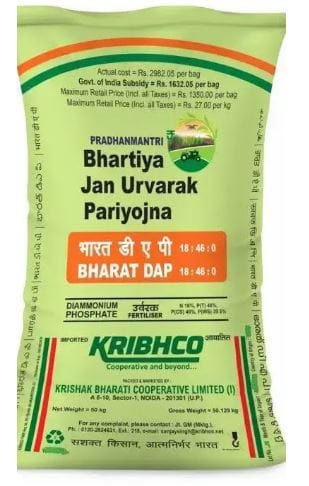
DAP not only supplies crops with essential nutrients—such as nitrogen, phosphorus, and potassium—but also plays a vital role in enriching the soil itself.
Nitrogen Content – 18%
Phosphorus Content – 46%
Sulfur Content – 0%
Calcium Content – 0%
What is SSP, and how is it used?
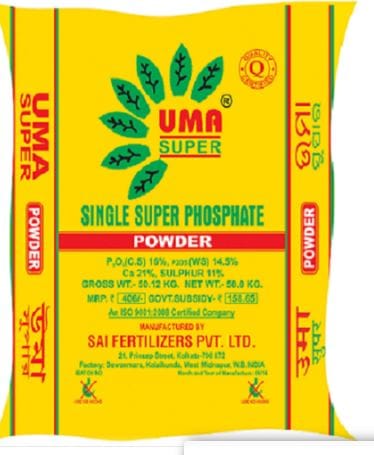
SSP (Single Super Phosphate) is an affordable fertilizer essential for the development of fruits and seeds. It helps plants synthesize critical phosphate-based compounds, such as nucleic acids, proteins, phospholipids, coenzymes, and phosphatides. In appearance, it consists of hard, granular particles ranging in color from brown to black or almond-brown; these granules are quite durable and cannot be easily crushed with a fingernail. It is also available in powdered form. This granular fertilizer is frequently adulterated with DAP, and it is also commonly blended with NPK fertilizers
Components of SSP (Single Super Phosphate)
- Monocalcium Phosphate (Ca(H₂PO₄)₂·H₂O): Typically makes up 75–80% of the fertilizer. This is the primary component providing water-soluble Phosphorus.
- Gypsum (Calcium Sulfate – CaSO₄·2H₂O): Comprises 15–20% of the fertilizer. It acts as a source of Sulfur and Calcium.
- Phosphorus (P₂O₅): Usually 16–20% (minimum 14% water-soluble).
- Sulfur (S): Approximately 11–12%.
- Calcium (Ca): Ranges from 18% to 21%.
- Free Phosphoric Acid: Max 4.0%.
- Moisture: 5.0% (Max) in granular to 12.0% (Max) in powdered form.
- Trace Elements: Contains small amounts of micronutrients like Zinc, Iron, and Magnesium.
- Silica: Present as an impurity in the raw rock
Componets SSP DAP Nutrient Composition contains lower phosphorus (16%) but includes necessary sulfur (12%) and calcium has higher nitrogen (18%) and phosphorus (46%), but no sulfur. Best Use Cases SSP is ideal for oilseeds (mustard, groundnut) and pulses superior for rapid growth in cereals (wheat, paddy). Cost and Efficiency SSP is more cost-effective for large-scale applications more efficient when a higher P concentration is required. Soil Impact: SSP improves soil structure, whereas DAP is preferred for quick, starter-dose nutrient availability.
Soil contains various types of nutrients that are essential for achieving a good crop yield. However, due to a multitude of factors, nutrient levels in the soil are gradually depleting. The market offers a wide variety of fertilizers that farmers utilize in their agricultural practices. The application of these fertilizers is determined based on the prevailing weather conditions and the specific nutrient requirements of different crops. Occasionally, the market faces severe shortages of these fertilizers, leaving farmers unable to procure them; consequently, they are unable to apply these fertilizers to their fields. To address this shortfall, both organic and chemical fertilizers are employed.
The pertinent question now arises: how—and to what extent—should these fertilizers be applied to ensure not only a bountiful crop yield but also the preservation of the soil’s fertility? Before applying any fertilizer to the fields, it is imperative to conduct a soil test to identify which specific nutrients are deficient in the soil. This practice facilitates the judicious use of manures and fertilizers by farmers while simultaneously improving overall soil health. Among the primary factors a farmer must prioritize before sowing crops are the selection of seeds and the appropriate application of fertilizers or manure. In agricultural fields, DAP (Diammonium Phosphate) and SSP (Single Super Phosphate) are the fertilizers most frequently utilized. Therefore, in this post by Tractor Guru, let us delve into the details of the fertilizers that are commonly used in farming fields.